Milestone Standard-A Diode Laser Hair Removal System
The Milestone Standard-A is the floor-standing diode laser hair removal system in the Milestone line: an 810 nm platform with a 10×10 mm spot, fluence from 1 to 40 J/cm² and sapphire contact cooling backed by thermoelectric cooling. It is FDA 510(k) cleared for hair removal and permanent hair reduction across Fitzpatrick skin types I–VI, including tanned skin, and it is built for clinics that run hair removal as a core, all-day service.
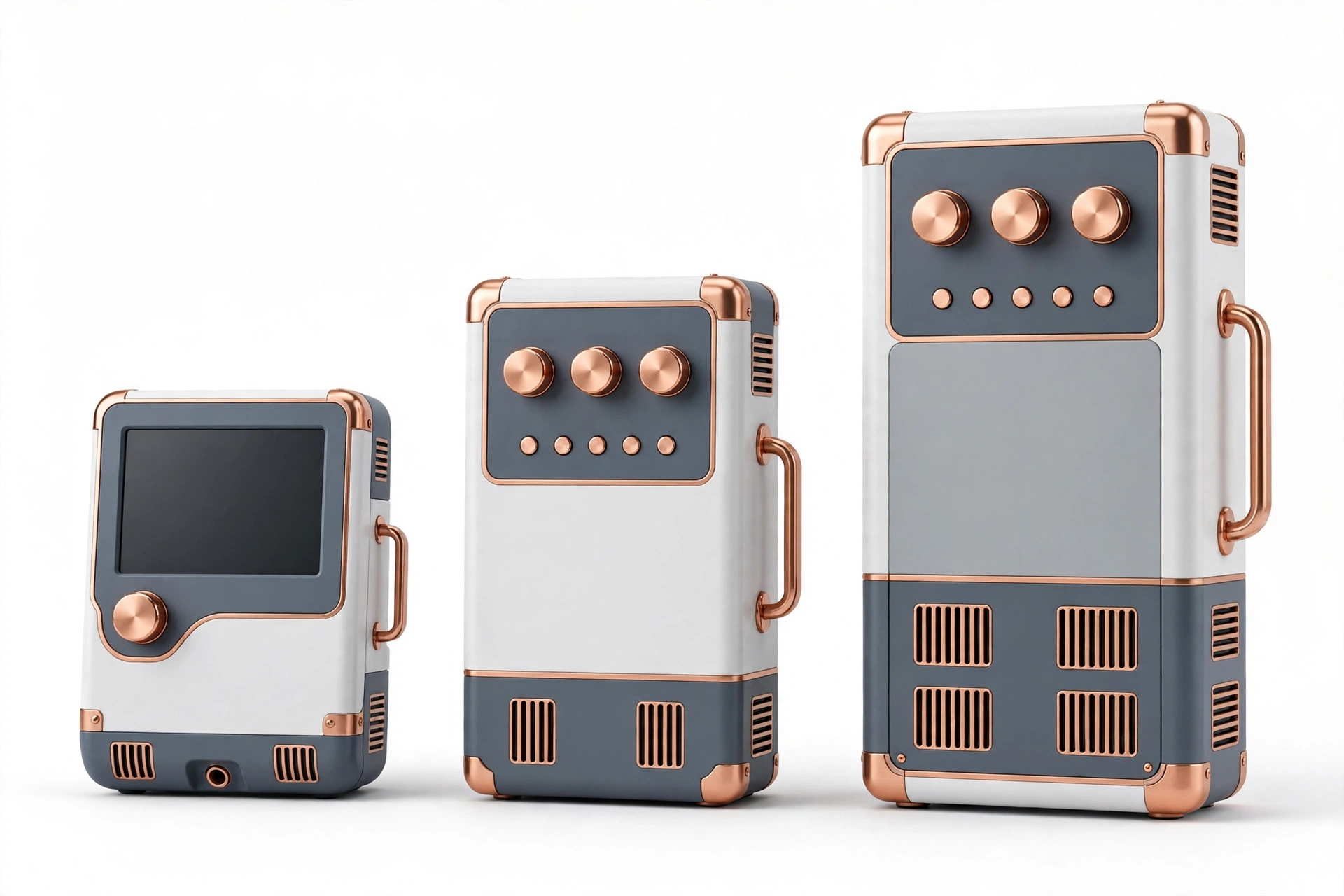
Diode laser hair removal system platform for OEM supply
Published parameters
The parameter set below is the manufacturer's published specification for the Standard-A. Fluence, pulse duration and repetition rate are independently adjustable, so the clinician can build protocols per body area and hair type inside the cleared window.
| Laser type | Diode laser, Class IV |
|---|---|
| Wavelength | 810 nm nominal (±10 nm) |
| Spot size | 10 × 10 mm (1.0 cm²) |
| Fluence | 1–40 J/cm² |
| Pulse duration | 3–160 ms |
| Frequency | 1–10 Hz |
| Cooling | Sapphire contact cooling + TEC (thermoelectric) |
| Power supply | AC 100–240 V, 50/60 Hz, 1500 VA |
| Dimensions | 464 × 387 × 979 mm |
| Weight | 46.1 kg |
| Operating environment | 5–30 °C, humidity ≤ 80% |
| Storage environment | 5–55 °C |
Regulatory standing
The Standard-A is FDA 510(k) cleared as a diode laser hair removal system for medical use, for hair removal and permanent hair reduction on Fitzpatrick skin types I–VI, including tanned skin. The cleared parameters are the 810 nm nominal wavelength, the 10×10 mm spot and the 1–40 J/cm² fluence range. The system is a standalone, prescription-use device with no network connectivity. Buyers who need the clearance documentation for their own market registration can request the documentation pack through the inquiry form; the regulatory guide page explains how the clearance is scoped and what it does and does not cover.
Who the Standard-A suits
The floor-standing format suits a dedicated treatment room in a clinic or large salon where hair removal runs through the day. The 10×10 mm spot balances coverage speed on large areas — legs, backs, chests — against the control needed on smaller zones, and the 1–40 J/cm² window covers the fluence range used across hair colours and skin types inside the indication. Contact sapphire cooling with TEC support is there for patient comfort and for epidermal protection during long lists, and the pulse-duration range lets the clinician lengthen pulses for darker skin protocols within the cleared indication.
Clinics comparing the Standard-A against the compact Smart-M should weigh room format and list volume: the parameter window is the same, so the decision is workflow, not capability. The salon and clinic guides walk through that decision in buyer terms.
Before you order
Confirm three things with your inquiry: the electrical supply in the treatment room (the system runs on AC 100–240 V), the doorway and lift access for a 46.1 kg floor-standing unit, and the operator training route in your market. The reply to your inquiry will include the configuration, the documentation pack list and the service arrangement for your country.
- Request the full documentation pack with your inquiry
- State your market so registration support can be scoped
- Ask for the Standard-A / Smart-M comparison sheet if format is undecided
Throughput arithmetic for a flagship room
A floor-standing platform earns its footprint when the diary is dense. Consider how a large body-area session flows on a 10×10 mm window: the operator works in overlapping passes, repositioning the handpiece steadily while contact cooling keeps the surface comfortable enough that the client stays still and the pace holds. Across a full leg or back appointment, small savings per pass compound into an extra booking slot by late afternoon. That compounding, rather than any single headline figure, is the economic argument for the Standard-A format in a high-volume room.
Repetition rate matters in the same quiet way. At the upper end of its 1–10 Hz range the system supports rapid stamping across broad zones; at slower settings the clinician gains deliberation for contours, bony prominences and cautious work near tattoos or moles. Having both tempos inside one console means the room does not reorganise itself around the machine's limitations when the appointment mix changes between morning and afternoon.
Staffing, training and hand-over
Clinics rarely run one operator per device forever. A prescription-use platform with a documented parameter window gives the lead clinician something concrete to train against: preset discipline by skin type, fluence escalation rules, cooling checks before every list, and a written escalation path when a client reports unusual sensitivity. Because the Standard-A and its compact sibling share the same cleared window, a practitioner trained on one walks onto the other without relearning the safety envelope — a genuine rostering advantage for groups operating several rooms.
Hand-over between shifts is the unglamorous moment where quality usually leaks. A sensible routine closes each list with the handpiece inspected, the sapphire window cleaned and checked for residue, the session log completed, and any client reaction notes flagged for the next operator. None of that is unique to this model; all of it is easier to standardise when the platform's behaviour is documented in the manufacturer's own parameter set rather than improvised per room.
Where the Standard-A does not fit
Honest placement matters. A single-chair salon with a part-time hair removal menu will not feed a floor-standing flagship enough hours to justify its footprint; the compact Smart-M exists precisely for that diary. A practice whose work is mostly facial and small-area treatment may likewise find the big console underused. The Standard-A justifies itself where body-area volume is real, where two operators share a room across a long day, and where the business sells full-course programmes rather than occasional single sessions. Buyers in that position should still ask how the unit is serviced locally and which consumables their market will need to stock, because uptime across a five-day week is the metric the purchase will be judged by.
Installation day and the first month
Commissioning a flagship room is a small project with an outsized effect on the following five years. The practical sequence runs: confirm the electrical supply and room layout against the manufacturer's requirements, position the console so the operator's working side has unobstructed access, run the initialisation and cooling checks, and treat the first fortnight as a supervised soft launch with the lead clinician present for every list. Clinics that compress this into a single delivery morning tend to spend the following quarter discovering, one appointment at a time, the workflow questions a structured launch would have answered on day one. The first month should close with a review — settings audited against the protocol book, client feedback read while it is still fresh, and any drift corrected while habits are young enough to change without argument.
Ask for a configuration and quotation
Send your market, the products you are evaluating and your buying pattern — the reply covers configuration, documentation and commercial structure.
Send an inquiry