Diode Laser Wavelengths: 810 nm, 808 nm and Triple-Wave, Kept Separate
Buyers comparing diode hair removal machines meet three wavelength stories: single-wavelength 810 nm systems, machines marketed at 808 nm, and triple-wave systems combining 755, 808 and 1064 nm. They are different product families with different evidence behind them, and this guide keeps them separate — including which one the Milestone systems in this range actually are.
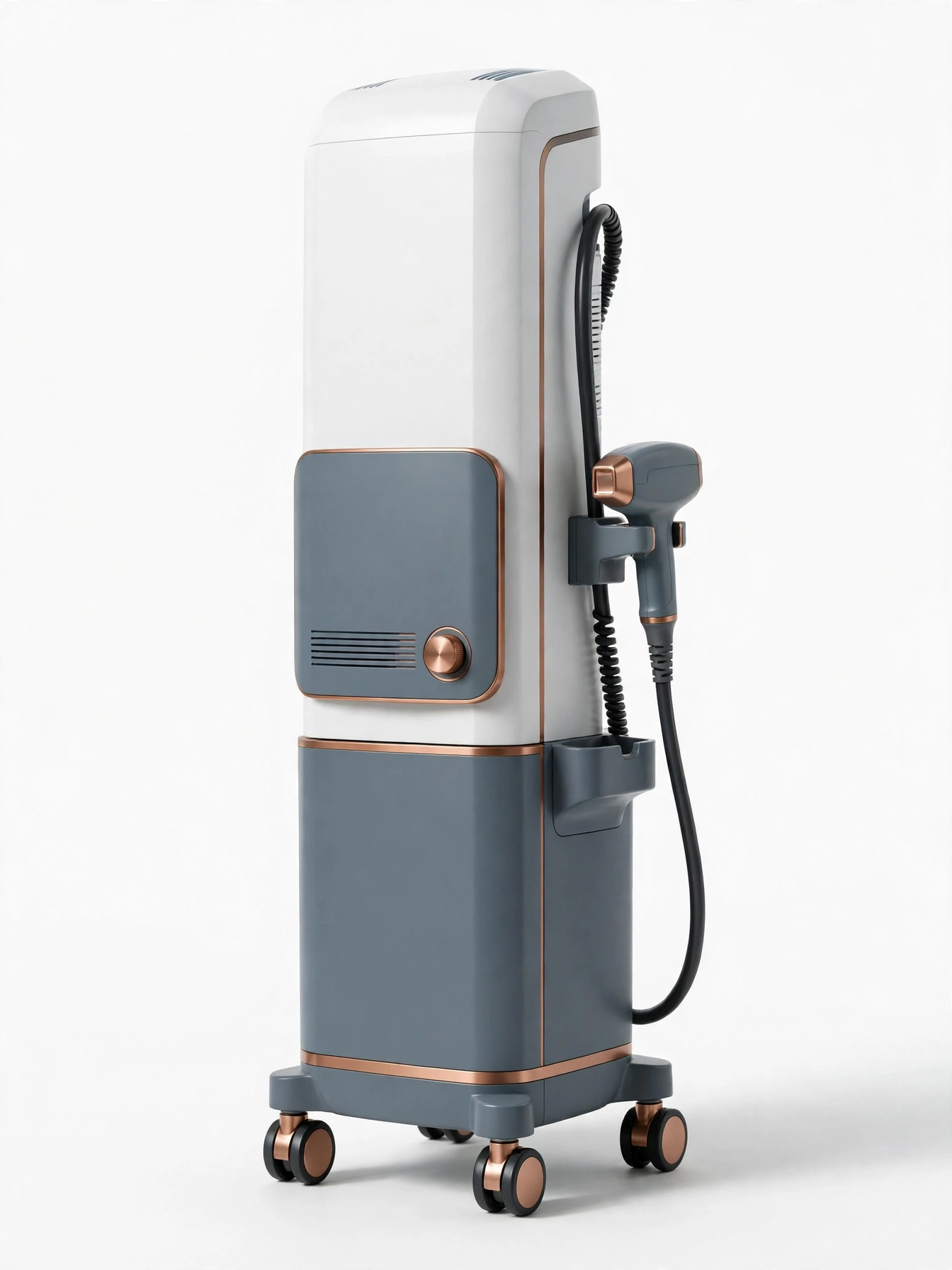
Illustration of a diode laser hair removal platform
The 810 nm single-wavelength family
The Milestone Standard-A and Smart-M are single-wavelength diode systems working at 810 nm nominal, with a stated tolerance of ±10 nm. That tolerance is the first key to the wavelength confusion in this market: a diode specified at 810 nm nominal operates in a band around that figure, and different sellers describe the same physical reality with different headline numbers. What matters for a buyer is the specified nominal wavelength and its tolerance on the manufacturer's own specification — for the Milestone systems, that is 810 nm ±10 nm, published with the full parameter set on the detail pages.
Single-wavelength design is a deliberate engineering choice, not a missing feature. The diode stack, the cooling and the pulse control are all optimised for one wavelength's behaviour in skin, and the regulatory clearance for the Milestone systems is written against that single-wavelength specification.
Where 808 nm comes from
The 808 nm figure saturates marketplace listings for diode hair removal machines. In many cases it describes diode bars from the same wavelength family as 810 nm nominal systems, marketed by the nominal centre of a production batch rather than by a cleared specification. A buyer cannot tell from a listing headline whether an '808 nm' machine is a distinct engineering specification or a marketing rounding of the same diode band — which is exactly why this site anchors on the manufacturer's published specification and its tolerance instead of on listing language. When a seller cannot produce a specification sheet with a nominal wavelength and tolerance, the wavelength claim is decoration.
Triple-wave variants are a different family
Triple-wave machines combine three wavelengths — typically 755, 808 and 1064 nm — in one handpiece, aiming alexandrite-like, diode and deeper-penetrating behaviour at different hair and skin combinations. Such variants exist in the wider market, including in marketplace listings attached to familiar model names. They are not the Milestone systems sold here: the Milestone Standard-A and Smart-M are single-wavelength 810 nm devices, and their clearance, their parameter tables and their skin-type indication belong to that specification alone. Attaching triple-wave parameters to a single-wavelength model — or single-wavelength clearance to a triple-wave variant — is the most common specification error in this product category, and this site's pages are written to never make it.
If your clinic's protocol genuinely calls for a multi-wavelength handpiece, say so in the inquiry: the reply will tell you plainly what in the produced range does and does not meet that requirement, rather than dressing a single-wavelength system in triple-wave language.
- Judge wavelength claims by the specification sheet and its tolerance
- Milestone = 810 nm nominal, single wavelength, cleared as such
- Triple-wave is a separate variant family with its own evidence
- Never merge parameters across the two families
Why the same diode wears three numbers
New buyers are often confused to find the same class of machine advertised at 808 nm in one catalogue and 810 nm in another, and the confusion is understandable because the numbers look like specifications rather than conventions. Diode laser bars are manufactured to a nominal centre wavelength with a production tolerance; different makers name the family by slightly different conventions, and temperature shifts the actual emission a little in operation. The manufacturer's own documentation for the Milestone line states 810 nm nominal with a ±10 nm tolerance, which is the honest way to publish it: a centre, plus the band it may occupy. When comparing suppliers, the presence of a stated tolerance is a better sign than a suspiciously exact single figure.
What matters clinically is not the label but where the band sits: deep enough for follicle reach across skin types, shallow enough for meaningful melanin absorption, and matched by the cooling and pulse discipline that make the energy usable. A buyer who understands that will stop asking which of 808 or 810 is 'better' and start asking better questions — about spot size, fluence range, pulse width control and how the handpiece manages heat between pulses.
Triple-wave platforms, assessed soberly
Machines combining 755, 808/810 and 1064 nm emissions in one handpiece answer a real desire: one box that gestures at every hair-and-skin combination. Their honest strengths are breadth and a simpler purchase conversation. Their honest compromises are that no element of the combination is automatically the equal of a dedicated single-wavelength platform built around one job — the alexandrite specialist will still argue, correctly, that a purpose-built 755 nm system is the connoisseur's choice for its niche, and the long-pulse 1064 tradition has its own dedicated following for the darkest skin work.
None of that makes triple-wave a poor purchase; it makes it a positioning decision. A generalist clinic wanting respectable coverage of everything may rationally prefer it. A clinic building its reputation on one population should buy the specialist for that population first. What buyers should not do is let a triple-wave listing's vocabulary leak onto other products: a combination machine's wavelengths describe that machine only, and single-wavelength platforms — the Milestone pair among them — stand or fall on their own published parameters.
A buyer's wavelength checklist
Ask for the nominal wavelength and its tolerance in writing. Ask which skin types and hair types the manufacturer positions the platform for, and notice whether the answer matches the wavelength's physics or wanders into universal claims. Ask how pulse width and fluence are controlled, because wavelength sets the stage while those two direct the play. Ask what the cooling does between pulses, not only during them. Finally, ask whether any additional wavelengths being advertised belong to the exact model under discussion or to a different machine in the same catalogue — the single most common source of specification disappointment in this category, and the easiest to prevent with one direct question.
How to read a wavelength claim in an advertisement
Advertisements compress, and wavelength is where compression does the most damage. A listing shouting three wavelengths may describe one combination handpiece, three separate platforms photographed together, or a range of which only one model is actually on offer at the quoted price. A listing quoting a single nanometre figure without tolerance may be describing a diode family's marketing name rather than a measured emission. The reader's counter-discipline is boring and total: for any wavelength claim, ask 'on which model, measured how, with what tolerance, and in which document?' Manufacturers with real engineering answer in documents; the Milestone specification's habit of stating a nominal value with its ±10 nm band is the pattern to hold every other claim against. Buyers who develop this reflex stop being confused by the 808-versus-810 question entirely, because they have learned to see both as labels on a band whose position and width are the actual information.
Wavelength and the Fitzpatrick map
It helps to hold a simple map in mind. Shorter visible and near-infrared wavelengths meet more melanin absorption and shallower useful depth; longer ones travel deeper with gentler epidermal interaction. The 755 nm alexandrite band sits at the absorptive, specialist end; the 810 nm diode band occupies the engineered middle that made it the industry's generalist; the 1064 nm region trades absorption for depth and is traditionally recruited where epidermal caution dominates every other consideration. Platforms are designed as positions on this map, with cooling and pulse systems built around their coordinates. A buyer who can sketch the map from memory will read any manufacturer's positioning — including the claims made for combination machines — with immediate, calm scepticism about which coordinates a given model truly occupies.
Ask for a configuration and quotation
Send your market, the products you are evaluating and your buying pattern — the reply covers configuration, documentation and commercial structure.
Send an inquiry