Diode Laser Hair Removal for Salons
Laser hair removal is the highest-value service most salons can add, and the barrier is usually format, not demand. This guide is written for salon owners evaluating the move: why the compact Milestone Smart-M exists, how to design the treatment menu around it, and how a salon grows from a benchtop unit to a floor-standing platform as the laser book builds.
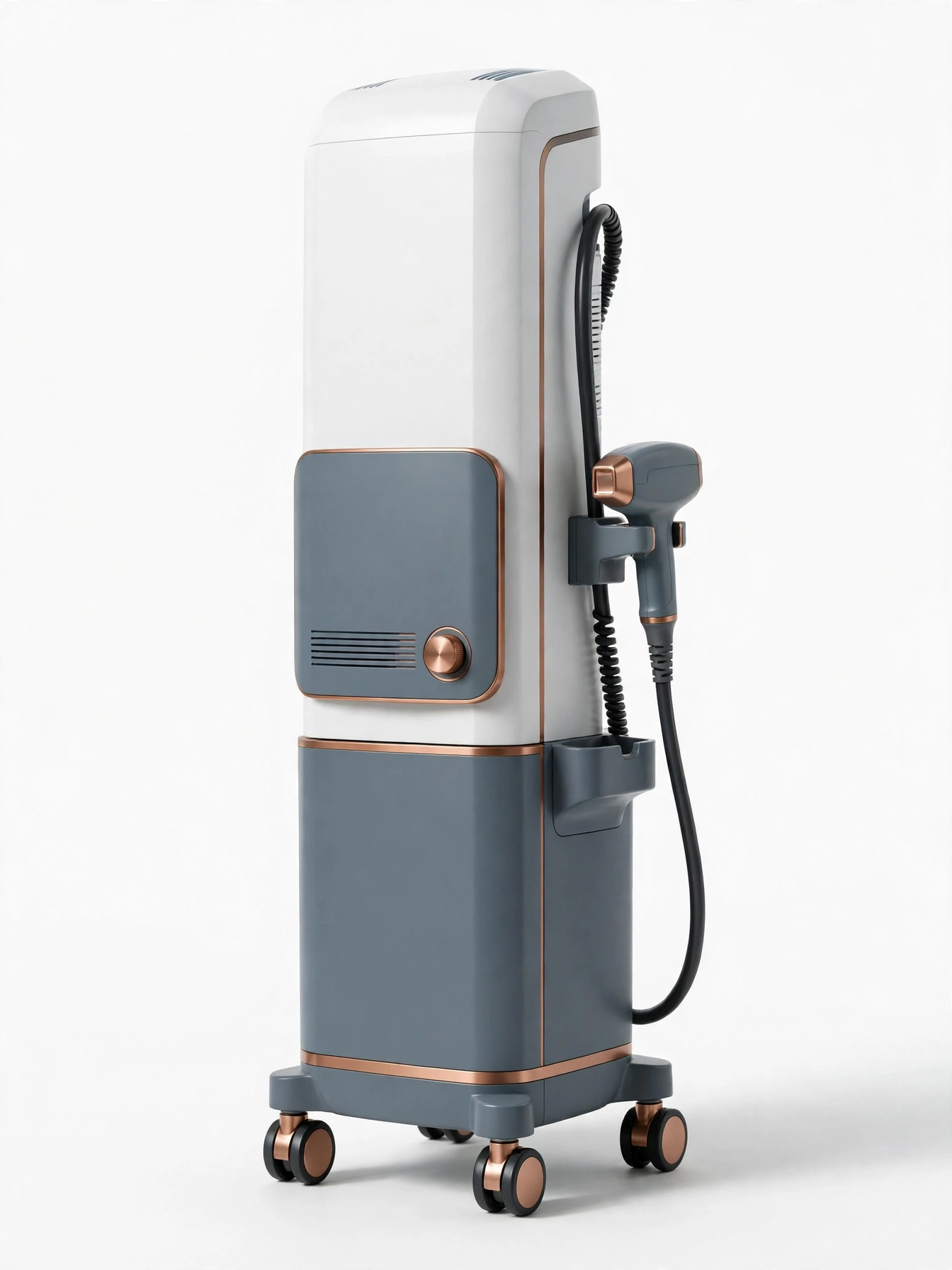
Illustration of a diode laser hair removal platform
Why format decides the salon business case
A salon does not have a spare clinic room to build out, and it cannot park a floor-standing machine in a corridor. The Smart-M was specified for that reality: 437×355×233 mm on a bench or trolley, 18.2 kg — movable by one person between rooms — on a standard AC 100–240 V supply. Critically for the business case, the compact format does not shrink the treatment offer: the Smart-M carries the same FDA 510(k) cleared parameter window as the floor-standing Standard-A, including the Fitzpatrick I–VI indication with tanned skin. The salon sells the full hair removal menu from day one; only the box is smaller.
Designing the salon laser menu
Start with the high-demand areas your existing clients already ask about — underarms, bikini, legs, upper lip and chin, men's backs — and price courses, not single sessions, because hair removal is a growth-cycle series and course pricing matches how the treatment actually works. Build the laser book into specific days so the machine and the trained operator are scheduled together, and market first to the client base you already have: waxing clients are the natural conversion audience, and they already trust your salon with exactly this category of appointment.
Compliance and the growth path
Laser operation sits under local rules that vary by market — operator certification, premises requirements and advertising limits differ, and the salon is responsible for its own compliance position. The manufacturer supplies the machine documentation pack; your local obligations are yours to confirm before the menu launches. When the laser book outgrows one benchtop unit — a good problem — the growth path is the floor-standing Standard-A for the main list, with the Smart-M keeping the second room or the second site. Protocols and parameters carry across unchanged, so staff training investment is preserved.
- Benchtop format removes the build-out barrier
- Sell courses matched to the growth cycle, not single visits
- Convert your waxing base first
- Confirm local operator and premises rules before launch
Fitting a medical platform into a beauty timetable
Salons run on a different clock from clinics: appointments interleave with nails, lashes and facials, clients drift in from the same chair they have occupied for an hour, and the hair removal offer succeeds when it feels like a natural extension of the visit rather than a clinical interruption. The Smart-M's bench footprint supports that informality — it arrives in the room without announcing itself as hospital equipment, and it leaves when the room needs to become something else. Salon owners should choreograph the offer accordingly: patch tests folded into existing appointments, first sessions booked as add-ons, courses sold as programmes alongside the client's standing beauty routine.
The regulatory posture needs translating into salon language. The Milestone systems are prescription-use devices with a cleared indication, and a salon operating one organises its supervision, training and record-keeping to match — but the client-facing story stays warm and plain: what the treatment does, how many sessions a course involves, what it feels like, what it costs as a programme. Salons that keep the paperwork rigorous and the conversation human get the best of both worlds; salons that let the clinical framing leak into the client experience tend to chill the very atmosphere that made their customers loyal.
Pricing the menu without frightening the regulars
Salon clients compare hair removal prices against beauty spending they already understand — the monthly nail appointment, the facial course — not against clinic tariffs across town. Pricing that works tends to be programme-shaped and legible: a course for an area, priced once, with maintenance sessions at a friendly rate for clients who complete. Per-shot or per-minute pricing confuses and slightly alarms; per-area course pricing reads as a beauty purchase. The salon should also model its chair economics honestly: a hair removal course occupies a room and a trained therapist, and the course price must carry that time at the same standard the salon's other premium services meet, or the menu will quietly be deprioritised by the very staff meant to sell it.
Introductory mechanics deserve care. A discounted first area introduces the platform without discounting its worth; a permanently cheap menu teaches clients to wait for offers. Salons with membership models can fold maintenance into the membership tier, which suits hair removal's rhythm — a course, then occasional upkeep — particularly well.
Training the team you already have
The salon's advantage is its people: therapists clients already trust, who know their skin, their sensitivity and their habits. Laser training should build on that knowledge rather than replacing it — the experienced therapist's skin-reading instincts are the foundation, and the platform training adds parameter discipline, cooling checks, contraindication screening and escalation rules on top. A sensible ladder starts therapists on supervised lists for straightforward cases, reviews their session records weekly, and expands their case mix as the records justify. What a salon must not do is treat the device as a plug-and-play beauty gadget because it is compact; compact describes its footprint, not its nature, and the governance should be identical to a clinic's even when the décor is softer.
The first ninety days of a salon laser menu
Launch sequencing decides whether a salon's laser menu becomes a fixture or a forgotten corner. The opening fortnight belongs to the team: every therapist treated or patch-tested, so every recommendation carries personal knowledge. The first month belongs to the loyal core — existing regulars invited personally, their courses documented (with permission) as the salon's founding results. The second month widens to general promotion, now armed with staff who speak from experience and clients who speak from results. The third month is for review: which areas sell, which therapists' lists fill, where the diary pinches. Salons that skip the sequencing and open with a public discount blast typically train their market to wait for offers and their staff to treat the platform as a promotion rather than a profession — two habits that are very hard to reverse later.
Ask for a configuration and quotation
Send your market, the products you are evaluating and your buying pattern — the reply covers configuration, documentation and commercial structure.
Send an inquiry