Diode Laser Hair Removal Machine Price: The Cost Factors
There is no honest single price for a diode hair removal machine, because the figure depends on the format, the platform and the market it ships to. This guide explains the factors that move the price — using the two Milestone formats as the worked example — so a buyer can read any quotation, including ours, with the right questions ready.
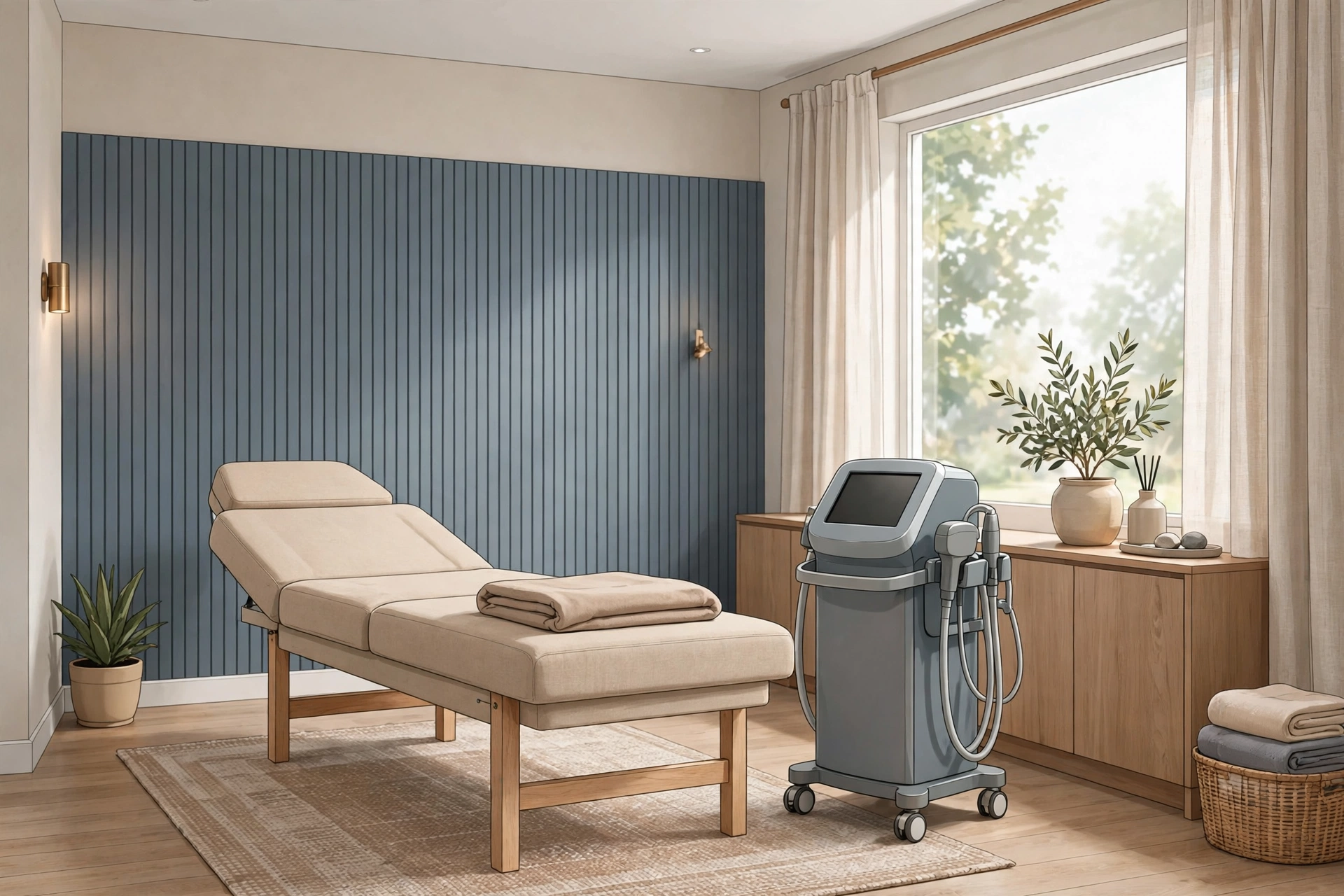
Illustration of an aesthetic laser treatment room with a platform device
Format is the first price split
In this range the same cleared parameter window ships in two housings: the floor-standing Standard-A (464×387×979 mm, 46.1 kg) and the benchtop Smart-M (437×355×233 mm, 18.2 kg). The floor-standing unit carries more cabinet, more service structure and a higher price; the benchtop strips the format cost while keeping the treatment window. A buyer quoted a single 'diode machine price' without a format named is not being quoted a real product — always pin the quotation to the model and its published parameter table.
Platform, cooling and documentation
Under the cabinet, price follows the diode stack, the cooling system and the control electronics. Sapphire contact cooling with TEC support costs more to build than air or water-only arrangements, and it is part of why two machines with similar headline wavelengths sit at different prices. Documentation moves price too: a system supplied with a full regulatory documentation pack — the Milestone systems carry FDA 510(k) clearance documentation — represents compliance work the buyer does not have to fund again in their own market. Service structure, warranty arrangement and spare-parts access complete the real cost picture; a cheap machine with no parts route is the expensive machine over five years.
Getting an accurate figure
Send the inquiry form with the model you are evaluating, your market and your order pattern (single unit, multi-site, trade). The reply quotes the configured system for your case, including the documentation pack and the service arrangement, so the number you plan against is the number you will actually pay. Compare competing quotations line by line against the parameter tables: wavelength and tolerance, spot, fluence window, cooling mechanism, and the documentation named in the quote.
- Pin every quote to a named model and parameter table
- Price the documentation pack, not just the machine
- Include service and parts access in the comparison
- Format choice is the biggest honest saving available
Reading a quotation line by line
A serious quotation for a diode platform itemises more than a machine. It should separate the console, the handpiece or handpieces included, the cooling arrangement, the documentation pack, training, warranty terms, and the spare-parts route with indicative parts pricing. When a quotation refuses to itemise, the buyer is being asked to compare a total against other totals whose contents differ invisibly — the classic setup for discovering, post-purchase, that the training was a video call, the warranty excludes the handpiece, or the documentation pack costs extra. Ask for the itemisation in writing; the supplier's reaction to the request is itself information about the relationship being entered.
Currency, taxes and delivery terms belong in the same scrutiny. An export quotation should state what is included to which point — packed, shipped, delivered, duties handled or not — because a machine's landed cost in the buyer's market can sit far above its factory-gate figure, and budgets set on the wrong number produce miserable surprises at customs. None of this is suspicion; it is the ordinary hygiene of capital purchasing, and professional suppliers expect it.
The five-year cost stack
Model the purchase across five years and the stack orders itself. At the base sits the acquisition cost, amortised. Above it, consumables and cooling upkeep; then handpiece service and eventual refurbishment, which production-grade usage schedules with some predictability; then training refreshers as staff turn over; then the downtime cost of any week the room stands idle awaiting a part — a figure clinics systematically underestimate until they have lived it. Finally, the opportunity layer: a platform whose indication covers the full local population monetises diaries a narrower machine cannot touch, and that revenue breadth belongs in the model just as much as the costs do.
Run honestly, this arithmetic regularly reverses the showroom ranking. The cheapest console with a thin documentation pack, vague parts route and narrow indication can cost more per treated client by year three than the platform that looked expensive in the brochure. Buyers should perform the stack for their own diary volumes rather than adopting anyone else's — the crossover point depends entirely on how many hours the room will actually run.
Negotiating without poisoning the well
Price negotiation with a manufacturer is the opening move of a service relationship, and buyers who treat it as combat often win a discount and lose a partner. The productive asks are specific and mutual: configuration choices that trade features the buyer does not need against price, training depth matched to the team's experience, payment scheduling aligned to the buyer's cash flow, demonstration or multi-unit structures for distributors. Each is a trade, not a concession, and each leaves the supplier able to say yes without quietly withdrawing something unnamed from the package. The buyer's final protection is simpler than any clause: buy the configuration the diary needs, at a total the five-year model supports, from a supplier whose answers stayed consistent from the first call to the signed page.
Demonstrations, references and the evidence ladder
Before price is finalised, a buyer should climb as much of the evidence ladder as the purchase size justifies. The bottom rung is documentation: specification sheets with tolerances, the regulatory file summary, the warranty text itself rather than a description of it. The middle rung is conversation with existing owners — ideally arranged by the buyer from the installed base rather than curated by the seller, and covering the unglamorous questions: parts turnaround, engineer quality, whether the five-year cost model they built bore any resemblance to the reality. The top rung is hands-on: a demonstration on the buyer's own premises or a site visit where the platform works a real list, not a staged half-hour. Each rung costs the buyer time and costs a weak supplier more, which is precisely the ladder's function — it prices confidence, and a platform that emerges well-supported from the climb has earned the serious end of the buyer's budget range.
Ask for a configuration and quotation
Send your market, the products you are evaluating and your buying pattern — the reply covers configuration, documentation and commercial structure.
Send an inquiry