Setting Up a Tattoo Removal Service with a Q-switched Nd:YAG
Tattoo removal is a programme business: patients commit to a series of sessions, progress is visible and photographed, and word of mouth is strong. This guide walks a clinic through setting up the service on a Q-switched Nd:YAG platform — consultation, treatment planning, workflow and how the service coexists with a hair removal menu.
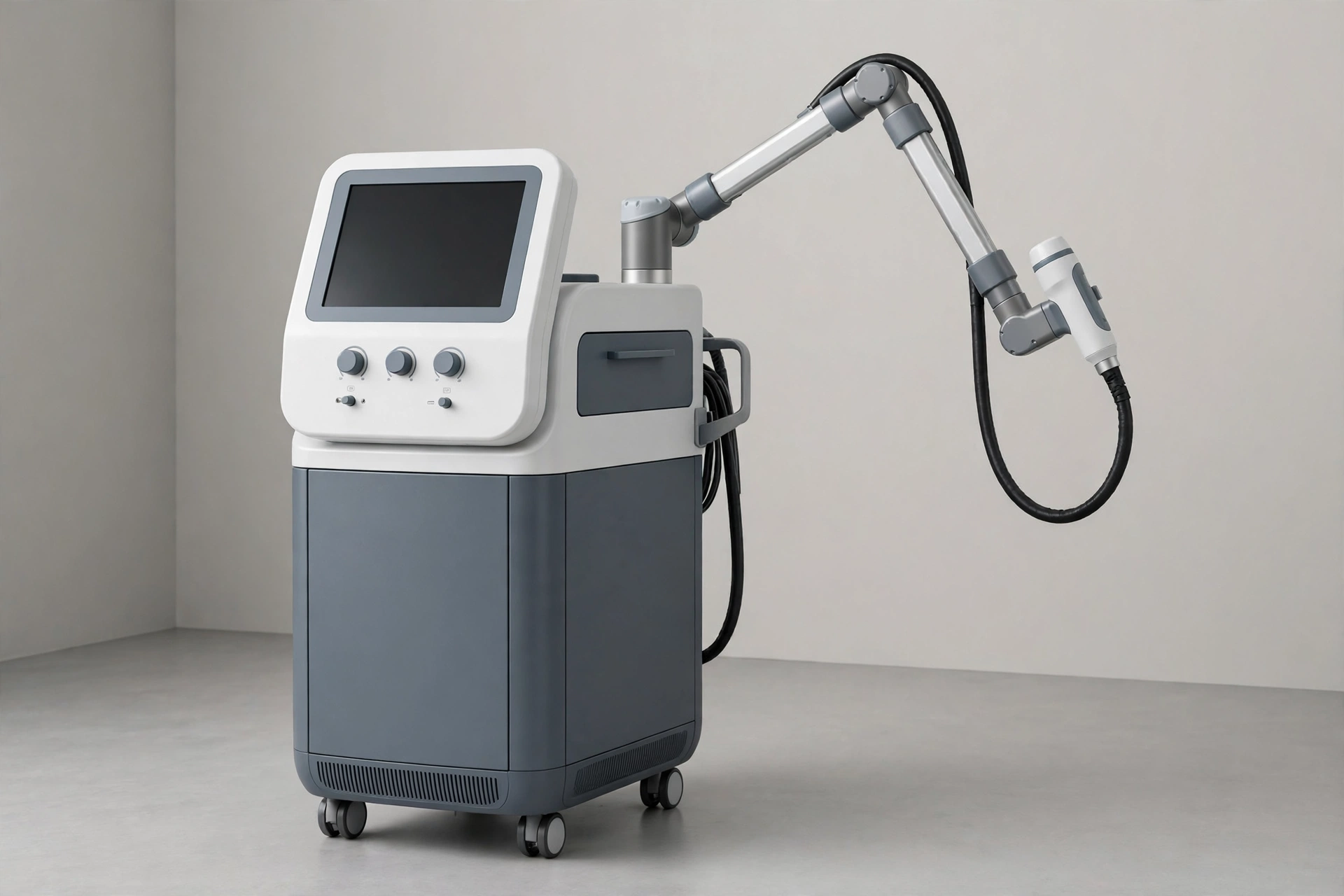
Illustration of a Q-switched laser device for tattoo removal
The consultation is the product
Tattoo removal outcomes vary with ink colour, ink depth, tattoo age and the patient's skin, so the consultation carries more weight than in hair removal. Clinics photograph the tattoo, discuss the likely session count as a range rather than a promise, explain the fading process — the laser fragments ink particles and the body clears them between sessions — and set the interval discipline that gives clearance time to happen. A Q-switched Nd:YAG platform is the instrument; the clinic's consultation quality is what patients actually buy.
Treatment planning
Session planning works ink by ink. Dense professional tattoos, layered cover-ups and cosmetic tattoos each behave differently under treatment, and the plan records the starting state so progress can be shown honestly at every review. Pigmented-lesion work sits in the same service family and can be planned into the same clinic days. The platform's configuration for your market — treatment heads, aiming and cooling arrangement, and the documentation supplied — is confirmed through the inquiry route, because those details are configuration-specific rather than headline specifications.
Room and menu workflow
Most clinics schedule tattoo removal on set days in a shared laser room rather than dedicating a room: the platform's session pattern suits block booking, and the same operator team usually covers hair removal on the diode or alexandrite platform on other days. Menu design matters — price the programme, not the single session, and build the review-and-photograph step into the patient journey. The comparison page explains how the Q-switched platform divides the menu with the diode, and the price factors guide covers what drives system cost in this class.
- Sell the programme: consultation, plan, photographed progress
- Set session intervals that let clearance actually happen
- Block-book the platform on set clinic days
- Confirm configuration details through the inquiry route
Setting the programme: sessions, spacing, honesty
The first consultation decides whether a tattoo programme succeeds commercially as well as clinically. Clients need three numbers discussed plainly: an estimated session range with its uncertainty admitted, the spacing those sessions require while the body clears fragmented ink, and the total calendar time that implies — frequently a year or more for a substantial piece. Clinics that quote a single session count to win the booking inherit a disappointed client by session four; clinics that frame the estimate as a range, and explain what moves a case within it — ink depth, colour palette, the tattoo's age, the client's own clearance — keep trust intact when the programme runs long.
Photography is the programme's memory. Standardised images at every visit, same lighting, same distance, same angles, let both parties see fading that gradual change hides from the eye. Reviewing the sequence with the client at intervals converts patience into evidence, and it protects the clinic when a client misremembers how dark the tattoo originally was — a common and entirely human error.
Ink colours and realistic expectations
Black ink is the cooperative pigment: dense, light-hungry, and usually the first to fade visibly. Coloured inks behave according to their chemistry, and some colours — certain greens, blues and yellows in particular — have a longstanding reputation for stubbornness on any platform. Cosmetic tattoos bring their own surprises, including pigments that can darken paradoxically when first treated, which is why test spots and cautious openings are standard craft rather than timidity. A clinic that explains this palette reality at consultation, and prices the programme accordingly, sounds less exciting than one promising rainbow erasure — and keeps its clients.
Partial goals deserve explicit respect. Many clients want fading for a cover-up rather than complete removal, and a lighter endpoint reached in fewer sessions is a legitimate, cheaper success. Others want a name gone and the surrounding artwork untouched, which is a precision exercise. Writing the actual goal into the treatment plan — removal, fading-for-cover, or selective editing — aligns the laser work with the client's life instead of an abstract standard of blank skin.
Running the service inside a wider clinic
Tattoo removal brings a distinct clientele through the door: younger on average, project-minded, often researching for months before booking. Co-locating the service with hair removal creates natural cross-talk — the client fading a forearm piece notices the clinic also handles the hair removal they have been meaning to arrange — and a shared consultation discipline keeps both menus credible. Operationally the service is gentle on the diary: sessions are short, spacing is long, and the room's constraint is consultation quality rather than machine hours. For a clinic with an underused second room, it is one of the most capital-efficient second menus available — provided it is staffed by someone who enjoys the counselling as much as the laser work.
Pricing structures that survive a long programme
Tattoo removal pricing fails in predictable ways. Per-session pricing set too low makes the clinic resent the long tail of sessions a difficult piece requires; set too high, it invites clients to stretch intervals beyond the productive spacing and then blame the platform for slow progress. Package pricing per area, with the session estimate and its uncertainty written into the agreement, aligns everyone better — but only when the clinic honours the estimate's spirit when a case runs long, absorbing a session rather than litigating the boundary. The clinics with the healthiest tattoo books tend to price the relationship, not the session: assessment, programme, reviews and a defined endpoint conversation, sold once and delivered patiently.
The studio partnership channel
Some of a removal clinic's best referrals arrive from tattoo studios themselves. Artists regularly meet clients whose old work must fade before a cover-up can succeed, and a studio that trusts a clinic's honesty — that the fading plan serves the artwork rather than the clinic's session count — will send those clients with a warm introduction. Building that trust takes visible restraint: assessing cover-up candidates for the minimum effective fading, reporting progress to the artist with the client's permission, and never disparaging the original work in consultation. Clinics that cultivate two or three such partnerships find a channel that no advertising replicates, because the recommendation arrives at the exact moment of need from the professional the client already trusts with their skin.
Ask for a configuration and quotation
Send your market, the products you are evaluating and your buying pattern — the reply covers configuration, documentation and commercial structure.
Send an inquiry