MagicEYES RF Eye Care Device
MagicEYES is a professional beauty device for eye care that combines bipolar radio frequency, tripolar radio frequency and micro-current leading-in as its main functions, supported by vacuum, cooling and constant-temperature heating. Used with nutrient liquid and massage manipulation, it is aimed at eye edema, the dark rim of the eye, pouches, wrinkles and relaxation, and at face lifting and rejuvenation work.
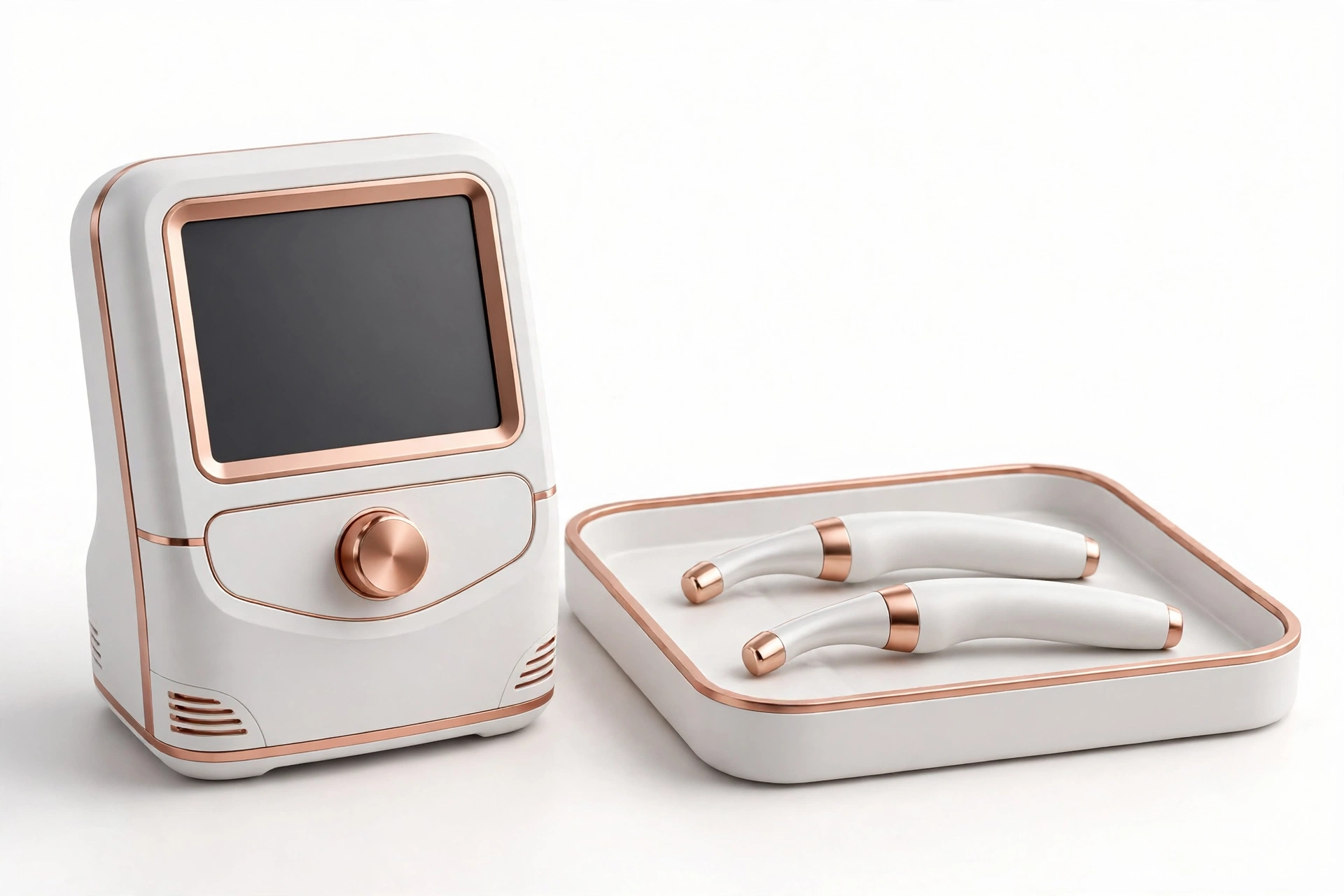
Illustration of an RF eye care device
Functions as published
The manufacturer's published function set for MagicEYES is functional rather than numerical: no power or frequency figures are published for this device, and none are invented here. The main functions are bipolar radio frequency, tripolar radio frequency and micro-current leading-in. The auxiliary functions are vacuum, cooling and constant-temperature heating. In treatment, the device is used together with nutrient liquid and massage manipulation, which is how the micro-current leading-in function is worked into an eye or face protocol.
Handpieces, piece by piece
Each handpiece has a defined role in the treatment sequence:
| D1 (1 pc) | Flat head inlet — heating massage ring head + electrical infusion |
|---|---|
| D2 (2 pcs) | Oval head inlet — heating massage ring head + electrical infusion |
| S1 handle | Bipolar RF + cooling — fine lines, edema, dark circles |
| S2 handpiece | Bipolar RF + vacuum — eye lifting |
| S3 (1 pc) | Tripolar RF — face lifting and rejuvenation |
Treatment positioning
The eye area concentrates several of the concerns clients book repeat appointments for: edema in the morning, dark rims, pouches, early wrinkles and general relaxation of the eye contour. MagicEYES addresses that cluster with the RF and micro-current set, and the S3 tripolar piece extends the same device into face lifting and rejuvenation, so a salon or clinic can sell an eye programme and a face programme from one platform. The cooling function is labelled the ICE Cooling System on the device, and it frames the RF steps so the treatment sequence alternates energy delivery with cooled contact.
For buyers, the evaluation questions are menu questions: how many eye and face programmes you plan to sell, whether your operators already work with RF devices, and how the device sits beside your laser platforms in the same treatment rooms. Send those details through the inquiry form and the reply will cover configuration, consumables workflow and the documentation supplied.
Building an eye-area menu that clients actually finish
Periocular work sells in courses, not singles, and course completion is a service-design problem. The clinics that retain clients across a full programme tend to book the whole sequence at the first visit, anchor each appointment to something the client already attends, and photograph progress under consistent lighting so change is visible rather than argued. A dedicated platform with several handpieces supports that design because each session can vary — radio frequency work one visit, micro-current leading-in with nutrient liquid the next — which keeps a six-visit course from feeling like the same twenty minutes repeated.
Pricing follows the same logic. A per-session price invites clients to stop when life gets busy; a course price with a review appointment built in frames completion as the product. The eye area is also a natural consultation gateway: clients who arrive worried about dark circles or early fine lines frequently ask, once trust exists, about the clinic's wider facial menu. A well-run eye programme therefore feeds the rest of the practice rather than competing with it.
Handpiece selection as a clinical language
The five handpieces are best understood as vocabulary. The flat and oval inlet heads pair heating massage with electrical infusion for product leading-in after cleansing. The S1 handle brings bipolar radio frequency together with cooling for the delicate under-eye zone, where fine lines, puffiness and dark shadows concentrate. The S2 handle adds vacuum assistance to bipolar RF for lifting work along the brow and lid. The S3 tripolar head steps out to the wider face — cheeks, jawline, forehead — where rejuvenation and firming programmes run. A practitioner who can explain, in one sentence each, why today's session uses this head and not another sounds like a clinician rather than a salesperson, and clients can hear the difference.
Sequencing across a course might open with infusion-focused sessions while the client settles into the routine, move into S1 work for the under-eye concerns that motivated the purchase, and widen to S3 facial sessions as confidence grows. That narrative arc — narrow to broad, gentle to active — mirrors how clients experience improvement and gives the review appointment something structured to evaluate.
Room, hygiene and client-comfort details
Eye-area treatment happens centimetres from a client's face, so the unglamorous details carry unusual weight: scrupulous handpiece hygiene between clients, fresh barriers where the design calls for them, a reclined position that lets neck and shoulders relax, and lighting soft enough that the client is not squinting through the session. The cooling function labelled in the manufacturer's materials as the ICE Cooling System contributes to comfort during RF work, and the constant-temperature heating of the massage heads should feel reassuring rather than hot — a sensation check at the first session sets expectations for the course. Clinics that script these small things find their eye menu reviewed online for how it felt, not merely for what it cost.
Presenting the programme in the clinic's own voice
Eye-area services are unusually sensitive to tone. The clientele arrives with concerns that sit close to self-image — tired-looking eyes, dark shadows that makeup no longer hides, the sense that their face reports a worse night's sleep than they had. Consultation language that works here is descriptive and unhurried: what the platform's radio frequency, micro-current and cooling functions do, what a session feels like, how a course is structured, and what change is realistic to expect.Language that fails is the language of alarm — magnified flaws, countdown pressure, transformation promises. Clinics should script the first consultation with the same care they give the treatment protocol, train whoever answers the phone into the same register, and audit their own social posts quarterly for drift toward the alarmist style that fills diaries this month and empties them next year.
Measuring whether the eye menu is working
An eye programme generates its own small dashboard, and reviewing it monthly separates thriving menus from decorative ones. Track course completion against courses sold, the interval discipline clients actually keep, rebooking into maintenance after the first course ends, and the conversion of eye clients into the wider facial menu. Pair those numbers with the clinical record — which handpiece sequences the team reaches for, where results stall — and the programme becomes manageable rather than anecdotal. A menu whose completion rate sags is usually suffering a scheduling design fault, not a device fault, and the dashboard makes that distinction visible early enough to fix with diary changes rather than discounting.
A note on seasonality around the eyes
Eye-area demand has its own calendar that clinics learn to anticipate. Wedding seasons, holiday photography, reunion events and the start of a new year all bring clients through the door with a date circled, and a course-based service must be scheduled backwards from that date with honest arithmetic about session spacing. Clients who begin too late for the full programme deserve a realistic partial plan rather than a compressed promise, and the clinics that say so plainly earn the referral when the same client plans earlier next time. Building these date-driven conversations into the consultation script — asking 'is there an occasion?' as routinely as asking about skincare — turns the calendar from a source of disappointment into a planning tool the whole team shares.
Ask for a configuration and quotation
Send your market, the products you are evaluating and your buying pattern — the reply covers configuration, documentation and commercial structure.
Send an inquiry