Alex 755 Alexandrite Laser Hair Removal Machine
The Alex 755 is the parameterised alexandrite model in the range: a 755 nm hair removal platform with 2000 W laser power, fluence adjustable from 0 to 100 J/cm², pulse widths from 3 to 200 ms and repetition rates of 1–10 Hz. Dynamic DCD cooling protects the skin in a non-contact treatment format, and an 8-inch HD touch screen runs the treatment interface. It is positioned for hair removal on hair types I–IV.
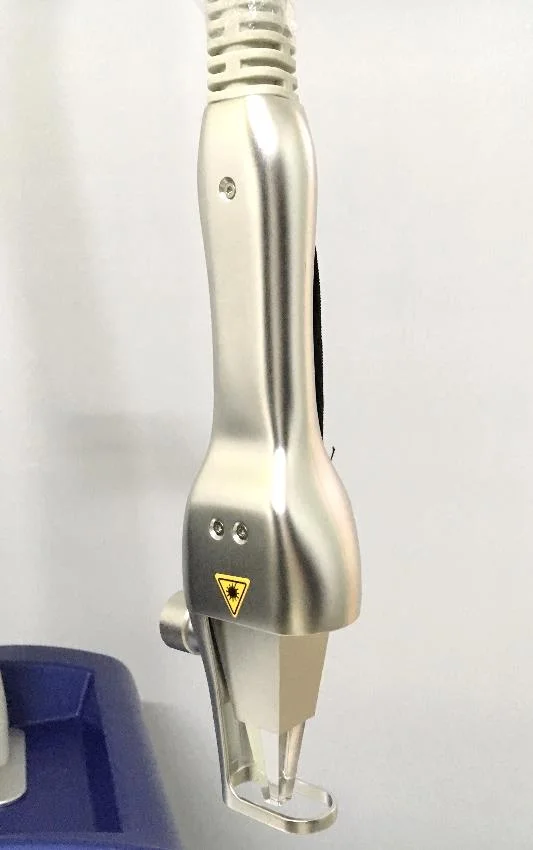
Alex 755 handpiece
Published parameters
The specification below is the manufacturer's published parameter set for the Alex 755.
| Laser type | Alexandrite laser |
|---|---|
| Wavelength | 755 nm |
| Laser power | 2000 W |
| Energy fluence | 0–100 J/cm² |
| Pulse width | 3–200 ms |
| Repetition rate | 1–10 Hz |
| Cooling | Dynamic DCD cooling |
| Screen | 8-inch HD touch screen |
| Positioning | Hair removal, hair types I–IV |
How the parameters are used
The wide fluence window and the 3–200 ms pulse-width range are the working tools on an alexandrite platform. Shorter pulses and higher fluence settings suit finer hair on lighter skin; longer pulse widths give the clinician room to work more conservatively. The 1–10 Hz repetition range supports both single-shot precision work and faster passes over large areas such as legs and backs. Because 755 nm energy is strongly absorbed by melanin, the Alex 755 is positioned for hair types I–IV; clinics treating the full Fitzpatrick range usually pair it with the 810 nm diode platform, whose cleared indication runs to type VI including tanned skin.
DCD cooling fires a measured cryogen spray with each pulse, cooling the epidermis at the moment of treatment. The format is non-contact — there is no cooled window pressed to the skin — which many alexandrite clinicians prefer for speed and for hygiene workflow between patients.
Selection guidance
Choose the Alex 755 when your patient mix is concentrated in hair types I–IV, when your clinicians are alexandrite-trained, or when you are adding the 755 nm wavelength beside an existing diode platform. Choose the diode platform first when your mix runs to darker and tanned skin, where the Milestone indication is the broader one. The clinic guide for alexandrite walks through room setup, patient selection and how the two platforms divide a treatment menu between them.
- 755 nm platform for hair types I–IV
- Non-contact DCD-cooled treatment format
- 8-inch HD touch screen interface
- Pairs with the 810 nm diode line for full-range coverage
The non-contact treatment rhythm
Working without contact changes the choreography of a session. The handpiece hovers, the DCD cooling sprays in its programmed relationship to each pulse, and the operator's attention goes to spacing, overlap and the client's feedback rather than to pressure and glide. Clinics moving staff across from contact diode work should budget a short familiarisation period: the hand positioning feels different, the treatment field stays drier, and gel disappears from the consumables list along with the laundry and clean-up that follow gel-based work.
The format also changes room turnover. Without gel application and removal, the interval between clients compresses to surface checks, protective eyewear exchange and the standard hygiene routine. Across a Saturday list those saved minutes are not trivial; they are where an extra consultation or a patch-test appointment tends to appear. None of this alters the underlying photothermolysis — it simply removes friction from everything surrounding the pulse.
Positioning the 755 nm platform in a mixed range
The Alex 755 is specified for hair types I–IV, and its honest home is a clinic whose clientele concentrates in those types and values the alexandrite tradition: short wavelengths, strong melanin absorption in the hair shaft, and a long clinical history on lighter skin. Paired with a diode platform carrying the broader I–VI indication, it becomes the specialist instrument rather than the compromise — chosen per client instead of stretched across everyone. Clinics that already own a diode workhorse often add the alexandrite second, once their booking data proves the lighter-hair segment is large enough to deserve its own room.
Single-platform buyers should read the positioning the other way round. If the local population spans the full Fitzpatrick range, the diode's cleared breadth is the safer first purchase and the alexandrite becomes the later refinement. If the practice is a dedicated lighter-skin clinic — a common pattern in some markets — the Alex 755 can legitimately be the primary platform from day one, with referral arrangements covering the occasional out-of-range client.
Reading the published numbers like a clinician
Three figures on the specification deserve a second look. The 2000 W laser power describes the engine's capacity, not the dose any client receives; the working range is set by fluence, published from 0 to 100 J/cm², and by pulse width, published from 3 to 200 ms. Shorter pulses concentrate energy in finer hair; longer pulses spread the thermal effect for coarser structures and greater caution. The 8-inch touch screen is the control surface through which those choices are made, and its size matters at arm's length with gloves on — a small ergonomic detail that operators feel every hour even though brochures rarely celebrate it.
Questions a clinic should ask before ordering
Ask which formats the range offers and what genuinely differs between the water-free Gentle configuration and the Pro — in workflow, in consumables, in the rooms each suits — because the answer reveals how the manufacturer thinks about its own line. Ask how DCD consumption is specified per treatment and how a clinic verifies it in practice. Ask what the 8-inch interface shows during a session and whether settings can be locked into clinic presets, a governance feature whose value grows with team size. Ask about engineer coverage in the buyer's region with the same directness. None of these questions is hostile; together they separate a platform a clinic can build a department around from one it merely owns, and a serious supplier will recognise the buyer asking them as the kind of customer worth keeping.
The platform in the showroom versus the platform at work
Demonstrations flatter every machine: ideal skin, an unhurried operator, a client chosen for compliance. The more useful evaluation watches a platform work an ordinary list — mixed areas, a nervous first-timer, a regular running late — and watches what the operator's hands and attention do. On the Alex 755 that means observing the non-contact rhythm at production pace, the DCD timing under repetition, and how the large control screen serves a clinician who is gloved, goggled and mid-conversation. Buyers who can arrange such a viewing should; buyers who cannot should at least interrogate owners about precisely those unglamorous minutes, because a platform is purchased for ten thousand ordinary sessions, not for one impressive demonstration.
Ask for a configuration and quotation
Send your market, the products you are evaluating and your buying pattern — the reply covers configuration, documentation and commercial structure.
Send an inquiry