Alexandrite Laser Hair Removal in the Clinic
For clinics whose patients concentrate in the lighter skin types, an alexandrite platform is often the hair removal centrepiece. This guide covers running the Alex 755 in a clinic setting: patient selection inside hair types I–IV, the DCD non-contact workflow, room planning and how the platform divides a menu with the 810 nm diode.
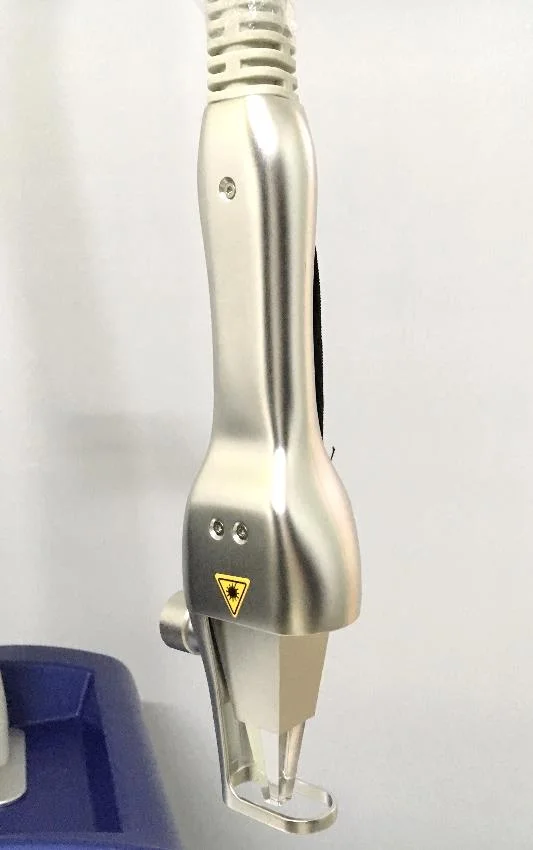
Alex 755 handpiece
Patient selection is the discipline
Alexandrite's strength and its boundary come from the same physics: 755 nm energy is strongly absorbed by melanin. On hair types I–IV that means efficient follicle targeting and the results the wavelength built its reputation on. Beyond that range, epidermal absorption competes too strongly, and the honest clinic routes those patients to the diode platform. Clinics should write that routing into their consultation script rather than leaving it to operator judgement on the day — the platform boundary is a published positioning, and menus that respect it produce fewer complications and better reviews.
The DCD non-contact workflow
Dynamic cooling changes the treatment rhythm against a contact platform. There is no window to couple to the skin; the cryogen spray cools the epidermis in step with the pulses, and the operator works in passes over the treatment area. Large areas move quickly in this format, and the between-patient workflow is simple because there is no contact surface in the treatment path. Room planning should allow for the cryogen consumable in the operating cost model, and for the ventilation and storage arrangements your local rules require for the cooling medium.
Pairing with the diode platform
The common clinic layout is alexandrite for the lighter-skin list and diode for the full-range list, with consultations booking patients onto the right platform from the first visit. The two platforms share the operator skill base and the same documentation route from this manufacturer. The alexandrite price factors guide covers what drives cost in this class, and the comparison page sets the two families' parameters side by side for the final decision.
- Write the I–IV routing rule into the consultation script
- Budget the DCD consumable into the operating model
- Run alexandrite and diode as one menu, two platforms
- Use the parameter comparison for the investment decision
Staffing the specialist room
An alexandrite room runs on judgement more than on routine. The platform's clientele — hair types I–IV, often finer hair on fairer skin — rewards operators who can read hair calibre accurately at consultation and set fluence and pulse width with intent rather than habit. Clinics should resist rotating every practitioner through the specialist room in the name of fairness; depth beats breadth here, and clients paying specialist prices can tell when they are somebody's first alexandrite list of the month. Keep a small, experienced team on the platform, let them build pattern recognition across hundreds of cases, and use the diode room — broader, more forgiving — as the training ground from which alexandrite operators graduate.
Consultation length is part of the same staffing logic. A platform positioned for a defined population earns its keep by assessing that population carefully: hair type mapping across body areas, tanning history, previous response to other platforms. Fifteen honest minutes at the front end prevents the two failures specialist clinics fear — the underwhelming result on hair that was never suited, and the adverse reaction on skin that was never properly read.
The DCD routine and client sensation
Dynamic cooling is the alexandrite experience as clients feel it: the cryogen spurts timed around each pulse, the surface protected and the sting taken down to a snap most people tolerate without flinching. Operators should explain the sequence before the first shot — the cold burst, the pulse, the rhythm the two settle into — because unexplained cold spray startles, and a startled client tenses through the session. Consumables discipline follows: DCD supply is a running cost with a logistics tail, and the clinic that tracks canister consumption against session counts knows its true cost per treatment rather than discovering it at reorder time.
The non-contact format carries its own housekeeping. No gel means faster room turnover and no gel-related laundry, but it also means the treatment field stays visible throughout — operators see exactly where each pulse lands, which rewards precise overlap discipline and exposes sloppy spacing mercilessly in the results. Clinics converting from contact platforms should audit early cases together, photographs against treatment maps, until the team's spacing instinct recalibrates.
Marketing a narrower indication honestly
A platform for hair types I–IV tempts copywriters toward vagueness — 'suitable for most skin types' and similar fog. Resist it. The specialist clinic's commercial strength is precision: it can promise its defined clientele a platform chosen for them, with parameters and a clinical tradition matched to their hair and skin, and it can say plainly that clients outside the range will be directed to the diode room or referred onward. That candour reads as confidence to the clients inside the range, who are, after all, the entire market the room needs. Clinics that blur the indication to fill quiet Tuesdays end up buying complaints with their own advertising.
Case selection vignettes: who thrives, who should wait
The thriving alexandrite case is easy to picture: fair skin carrying dark, fine-to-medium hair, a client who has researched the platform by name and values the specialist tradition, treating areas where precision and pace both matter. The case that should wait is equally recognisable once named: a recent deep tan not yet settled, hair so fine and pale that melanin targeting of any flavour will disappoint, or expectations set by a friend's diode results on a different skin type entirely. A clinic's case-selection discipline is the sum of these small judgements, and it is trainable — review declined and deferred cases in team meetings with the same seriousness as completed ones, because the consultations a clinic declines define its results statistics as surely as the ones it accepts.
Seasonality and the alexandrite diary
Specialist hair removal has a calendar. Demand for body-area courses swells in the months before summer in most markets, while tanning behaviour in the same season complicates candidacy for a 755 nm platform whose clientele is precisely the population most likely to tan. Skilled clinics plan around the tension rather than discovering it annually: consultation pushes in the cooler months, honest conversations about treatment timing relative to holidays, and maintenance scheduling that respects exposure realities. The diode room down the corridor absorbs the clients whose summer skin falls outside the alexandrite's range, which is one more argument for the two-platform house — seasonality that would strand a single-platform specialist becomes a routing exercise instead.
Ask for a configuration and quotation
Send your market, the products you are evaluating and your buying pattern — the reply covers configuration, documentation and commercial structure.
Send an inquiry