Alexandrite or Diode First? A Clinic Decision Framework
Most clinics that ask 'alexandrite or diode?' are really asking where to put their first serious capital. The answer depends on four things — patient mix, clinician background, cooling preference and growth plan — and this framework works through them in that order.
Patient mix decides most of it
Count your expected patients by Fitzpatrick type before you look at a single machine. Alexandrite at 755 nm is positioned for hair types I–IV; the diode platform at 810 nm carries an indication across I–VI including tanned skin. If your local population, honestly assessed, sits inside the lighter types, the alexandrite is a legitimate lead platform and its strong melanin absorption will serve your core list superbly. If your mix spans the scale — as most urban and tourist-market clinics find — the diode has to lead, because the lead platform cannot be one that turns patients away at consultation. Clinics regularly misjudge this by picturing their ideal patient rather than their actual postcode; use your enquiry history, not your aspirations.
Clinician background is real capital
A team trained on alexandrite works fluently on alexandrite: the non-contact DCD rhythm, the fluence judgement at 755 nm, the patient counselling for that wavelength. Retraining is possible but it is a cost, and it belongs in the purchase comparison. The reverse also holds — a diode-trained team moving to alexandrite needs the same respect. Where a clinic has no legacy training either way, the decision returns to patient mix, and versatility usually wins for a first platform.
Cooling preference and the working day
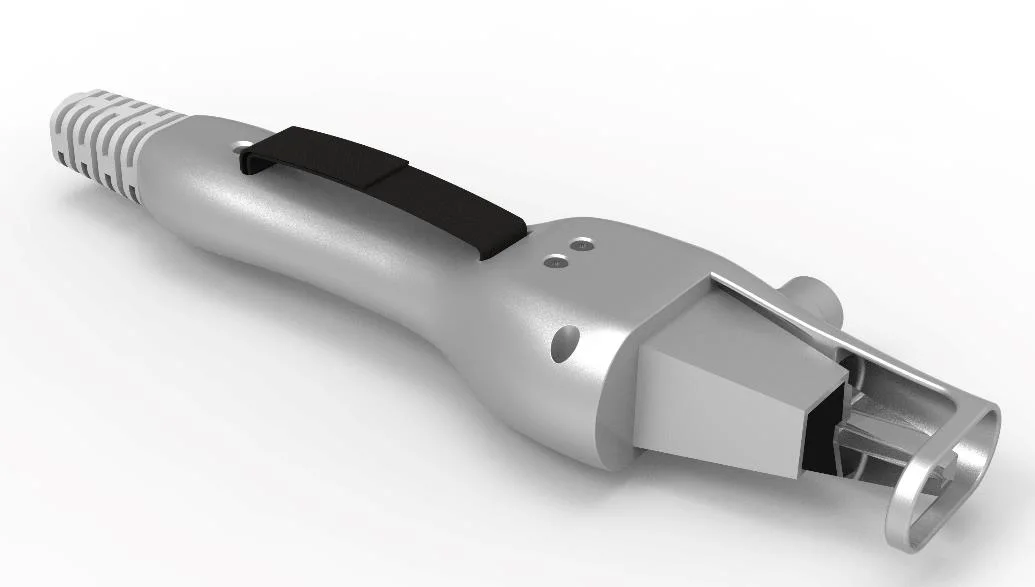
The two platforms cool differently, and operators develop genuine preferences. Contact sapphire cooling with TEC support gives continuous surface cooling and a pressed, even treatment field; DCD spray cooling works without contact and suits fast passes over large areas. Neither is 'better' in the abstract — but the one your team prefers is the one that will be used at full protocol quality at 5 p.m. on a full list. If you can, have the lead clinician handle both working styles before the capital decision is locked.
The two-platform endgame
For most established practices the endgame is both platforms: diode as the full-range base, alexandrite as the lighter-skin specialist, consultations routing patients to the right wavelength from the first visit. Buying the first platform from a manufacturer who also makes the second — with the same documentation route and service structure — keeps that endgame simple. Decide the sequence by patient mix, buy the lead platform properly rather than cheaply, and let the refused-consultation count tell you when the second platform's business case has arrived.
The money view
Run both options through the same five-year table: platform and configuration, documentation, training, consumables, service and one handpiece replacement. The alexandrite column picks up the DCD cooling medium as a genuine running cost; the diode column carries its contact-cooling consumables pattern, which is lighter. Revenue modelling should use your real patient mix — an alexandrite run against a dark-skinned population will show empty chairs where the model promised treatments, because those patients were never treatable on it. The platform that matches the mix wins the money view almost regardless of the sticker prices, which is why the mix analysis in step one outranks every discount conversation.
Signals you chose well
Six months after installation, the right first platform shows a specific signature: the consultation refusal rate is low and stable, the list runs at the protocol quality your lead clinician set in week one, and the second platform's case is being made by counted refused patients rather than by enthusiasm. The wrong first platform shows the mirror image — a growing referral-out list, operators quietly narrowing the treated mix, and a machine whose specification looked complete in the brochure and partial in the room. If you are mid-decision and torn, choose the platform that refuses nobody in your actual mix. Versatility is rarely regretted in a first purchase; specialism is a second-purchase luxury that earns its place precisely because the base is already covered.
Two worked examples
Consider a city-centre clinic in a northern market: patient mix concentrated in Fitzpatrick I–III, a lead clinician alexandrite-trained for a decade, an established referral stream from dermatologists for lighter-skin hair work. The framework's answer is alexandrite first, without much hesitation — the mix fits, the training is sunk capital, and the diode can follow when the clinic deliberately builds its darker-skin service. Now consider a coastal clinic in a sunny market: mix across I–VI, tanned skin a year-round presentation, no wavelength legacy on the team. The same framework answers diode first just as firmly, with alexandrite as the planned specialist once the base list is full. Same equipment catalogue, opposite correct answers — because the decision was never about the machines. Clinics that find both examples plausible for their own practice should weight the tie-breaker this framework gives last and most: the platform that refuses nobody in the real mix goes first, and counting your last hundred enquiries by skin type takes an afternoon that will save a capital mistake.
The decision, in one paragraph
Count your patients by skin type; let that count lead. Credit the training your team already owns; it is capital. Let your lead clinician's cooling preference speak; it predicts protocol quality at the end of long lists. Price both options across five honest years, consumables and handpieces included. Then buy the platform that treats your whole real mix if the mix spans the scale, or the specialist if the mix truly sits inside its range — and buy it from a maker whose range also contains the other platform, so the second purchase, when the counted refusals justify it, arrives as an extension of a working relationship rather than a new vendor negotiation. That is the whole framework; the rest of this article is its evidence.
A final check before signing
Before committing, run one patient-list rehearsal: take last month's actual hair removal bookings and mark, honestly, which platform would have treated each patient. If the diode column holds nearly everyone and the alexandrite column holds a profitable minority, the sequence writes itself — diode first, alexandrite when the minority's revenue justifies a second room. If the split surprises you, the surprise itself was worth the exercise.
Ask for a configuration and quotation
Send your market, the products you are evaluating and your buying pattern — the reply covers configuration, documentation and commercial structure.
Send an inquiry