How Q-switched Nd:YAG Tattoo Removal Works
Tattoo removal patients ask two questions — how does it work, and how long will it take. This article answers the first properly: the Q-switched pulse, the fragmentation of ink particles, the body's clearance role, and why those facts dictate the session spacing that answers the second.
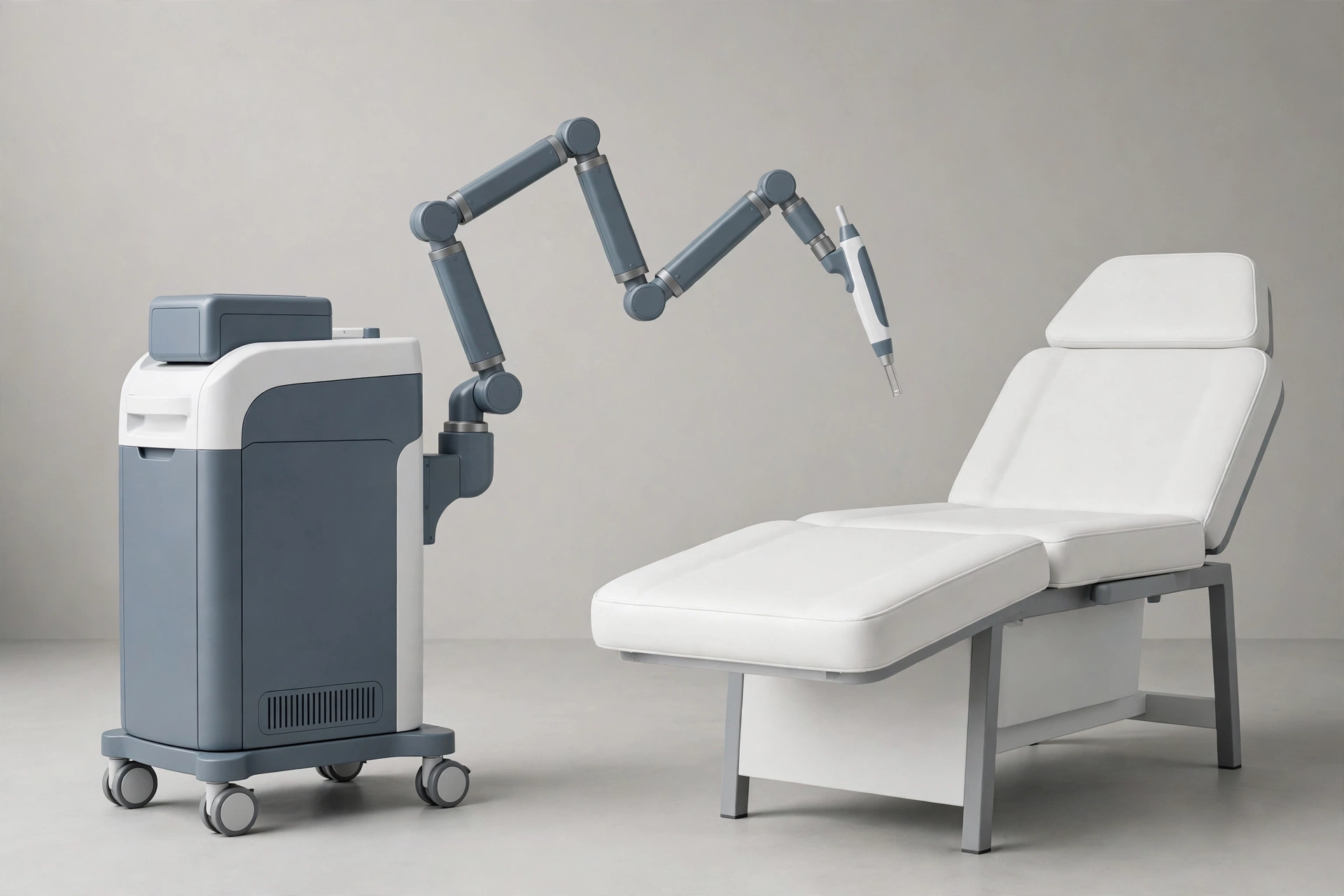
The Q-switched pulse
A Q-switched laser stores its energy and releases it in a pulse so short that the peak power is enormous while the total energy stays controlled. Delivered into tattooed skin, that pulse is absorbed by the ink particles and heats them faster than they can shed the energy, so the particles fracture into far smaller fragments. The surrounding skin, which absorbs far less of the pulse, is largely spared — the effect is mechanical and thermal at the scale of the pigment particle, not a general burn of the tissue. That selectivity is the entire basis of laser tattoo removal, and it is why the Q-switched Nd:YAG platform is the standard instrument for the service.
The body does the removing
The laser does not lift ink out of the skin; it breaks the ink into pieces small enough for the immune system to carry away. Macrophages collect the fragments and clear them through the lymphatic system over the following weeks, which is why a tattoo fades gradually after each session rather than vanishing under the handpiece. This single fact dictates the service design: sessions are spaced to give clearance time to happen, progress is photographed so patients can see change across the programme, and honest clinics quote session ranges rather than guarantees, because clearance speed is a property of the patient's biology as much as of the machine.
Ink, depth and difficulty
Not all tattoos respond alike. Dense professional work carries more ink, placed deeper and more evenly; amateur work is often shallower and lighter; layered cover-ups stack two tattoos into one treatment problem. Ink colour changes the absorption picture and therefore the treatment plan. A good clinic consultation reads the tattoo — its density, layering, colours and the skin around it — before it prices the programme, and a good clinic tells the patient which parts of the tattoo will be slow. That honesty is what separates a tattoo removal service patients recommend from one they warn about.
Building the service
For the clinic, the Q-switched platform pairs naturally with a hair removal base: same laser room, overlapping operator skills, and a patient base already comfortable with laser treatment. The programme structure — consultation, plan, spaced sessions, photographed reviews — makes tattoo removal one of the most retention-friendly services in aesthetic practice. The clinic setup guide on this site covers the operational side: consultation scripts, block scheduling and how the platform sits in the weekly room plan.
Why tattoos resist, session by session
A tattoo is engineered by the body to stay: ink particles too large for immune cells to remove are held in the dermis, and the body walls them into a stable equilibrium. Each laser session fractures a share of the exposed particles; the immune system clears the fragments; the next session reaches the layer beneath. Fading is therefore fastest early — when ink is dense and superficial — and slower later, when the remaining ink is sparse, deep or bound in scar tissue from the original tattooing. Professional tattoos carry more ink, placed with more discipline, and clear more slowly than amateur work; cover-ups clear slowest of all because two inks occupy the same ground. Setting this expectation numerically at consultation — a range, honestly wide — is the difference between a patient who completes a programme and one who drifts away after session three convinced nothing is happening.
Skin, colour and the treatment plan
The platform's energy interacts with the patient's own pigment as well as the ink, so skin type shapes the plan just as it does in hair removal: conservative settings, test areas and patience on darker skin are the professional pattern. Ink colour matters because absorption is wavelength-dependent; a clinic's plan for a multicoloured piece is written colour by colour, and some colours pace the whole programme. None of this complexity is a sales obstacle — explained properly at consultation, it is the substance that makes a clinic's tattoo service feel like medicine rather than marketing, and it is why photographed, staged reviews belong in every programme: they let the patient see the clearance their own body has achieved between sessions.
What patients feel and see
Patients consistently report that the sensation is sharp and brief — commonly compared to the snap of an elastic band, and often described as less uncomfortable than being tattooed, because each treated area is finished quickly. The treated skin typically frosts white for a short period immediately after the pulses, then settles into redness and swelling over the following days, with the surface healing while the deeper clearance proceeds invisibly. Clinics should narrate this sequence before the first session, including the unglamorous parts — the frosting, the aftercare discipline, the sun protection the treated area needs between sessions — because a patient who recognises each stage as predicted trusts the programme, and a surprised patient assumes something went wrong. Tattoo removal is a service where the science is genuinely interesting; explaining it well is not decoration on the treatment, it is a clinical tool for retention.
Aftercare is half the treatment
What happens between sessions decides how much of the laser's work survives. The treated area needs protection while the surface settles: cleanliness without aggression, no picking at any crusting, and strict sun discipline, because tanned or sunburned skin changes the treatment picture and raises the risk of pigment disturbance in the treated zone. Patients should also expect the tattoo to look worse before it looks better at certain stages — frosting, darkening of some inks as they fracture, uneven fading where ink density varied. Clinics that hand patients this map in writing at session one field fewer anxious calls and keep more patients to programme completion, which is where the clinical result and the business result are the same thing.
Ask for a configuration and quotation
Send your market, the products you are evaluating and your buying pattern — the reply covers configuration, documentation and commercial structure.
Send an inquiry